As of now, all the narratives are graded and the second marking period grades are in. I work hard to keep the grades as up to date as possible. (I have a few unit 4 quizzes waiting to be scored, though.)
Homework:
I gave 3, 4, 5, and HB sections a quick worksheet to do on compound subjects and verbs. If today's responder daily drill is any indication, they need practice.
PTA Reflections pieces are due Tuesday.
Tuesday, November 16, 2010
Monday, November 15, 2010
November 15, 2010
Section 6 narratives are graded. The grades are updated on HAC.
I will have section HB narratives done tomorrow... I hope.
Homework: PTA Reflections Contest is due next Tuesday. I collected the proposal today.
Here is what we covered in class today:
Lesson 3: Simple Predicates, or Verbs (page 10)
The simple predicate, or verb, is the main word or words in the complete predicate.
Prairie pioneers lived in sod houses.
Few trees grew in the prairie grasslands.
A verb is a word used to express an action, a condition, or a state of being.
Linking verbs- am, is, are, was, were, appears, seems, feels, and others
He is the president.
He was happy to be alive.
Pioneers made sod bricks.
Practice and Apply
1. My great-grandparents lived in a sod house, or soddy, on the great Kansas prairie.
2. They traveled west from their home in Tennessee.
3. The men used nearly and acre of sod for the house.
4. The home had only two windows and one door.
5. My family built their soddy in the side of a hill.
6. Sometimes the cows ate through the roof of the house.
7. Once, a cow fell through the roof into the house.
8. Heavy rains at times soaked through the sod.
9. The dirt floor turned into a giant mud puddle.
10. Still, sod houses protected my family from the harsh winters.
Lesson 4: Verb Phrases (page 12)
A verb phrase is made up of a main verb and one or more helping verbs.
A “smart house” may cook your food for you.
Main verb and Helping Verbs
A main verb can stand by itself as the simple predicate.
Computer networks run smart houses.
The network is the brain of the house. (linking verb)
Common helping verbs
Forms of be- am, is, are, was were, be, been (sometimes a linking verb)
Forms of do- do, does, did
Forms of have- has, have, had
Others- may, might, can, should, could, would, shall, will
Practice and Apply
1. The first “smart house” was developed in the early 1980s.
2. Its appliances could communicate with each other.
3. Suppose you were running the vacuum cleaner.
4. The noise might keep you from hearing the phone.
5. In that situation, the house would stop the vacuum cleaner automatically.
6. Those with disabilities may benefit the most from a smart house.
7. The house will perform some of the tasks beyond their capability.
8. For example, meals could be brought to a person’s bed.
9. The food will have been prepared by a smart kitchen.
10. Surely, you can imagine other uses for a smart house.
Lesson 5: Compound Sentence Parts
A compound subject is made up of two or more subjects that share the same verb.
Salyut 1 and Skylab were the first space stations.
American astronauts or Russian cosmonauts lived aboard the stations.
A compound verb is made up of two or more verbs that have the same subject.
The Skylab crew worked and slept in close quarters.
They worked hard but slept little.
Practice and Apply (page15)
1. Space stations and orbiting platforms are our first step away from Earth.
2. In the future, we may design and build outer-space cities.
3. Several nations or international groups could pool (consolidate) their resources.
4. They could create and manage a colony on the moon.
5. Minerals and other raw materials would be shipped to colonies in space.
6. We already design and plan model cities.
7. In one design, two huge cylinders and their solar panels form the main body of the space city.
8. The cylinders rotate and create an artificial gravity.
9. Special greenhouses shelter and sustain the city’s food.
10. These cities or other space colonies could bring is closer to the stars.

Friday, November 12, 2010
PTA Reflections proposal due Monday
Grades are updated in all classes for the 2nd MP. Please check HAC. However, sections 3, 4, and 5 are the most accurate because I finished grading the narrative essays for them. I will get to the other two classes ASAP.
PTA Proposal Due Monday
Here are some things to think about for Monday's proposal. You could also check out the winners from last year here.
PTA Reflections Contest theme: “Together we can…”
1. Make a list of 25 things that can be done together.
2. Pick one of the items from your list.
Explain what the activity would look like if it were not done together but alone.
3. What is so special about being/doing something together?
Free think about how you feel about “togetherness.”
What is togetherness?
Who needs togetherness?
Why do we need togetherness?
Where do you see togetherness?
When do we need togetherness?
4. What type of art project could you do to demonstrate how you feel about togetherness?
What could you photograph? What would be in the picture?
Could you write a poem about a moment?
How about a poem that paints a picture?
Can you make something graphic on your computer?
Here is a sample explanation from last year’s theme, “Beauty is…”
"Beauty is not about being young with a perfect complication. It is about you, as an individual and how you treat others... My great grandmother who is 89 truly defines the word beauty. She has lived a very long life, has seen and experienced things we read about in history class. She grew up on a farm with nine brothers and sisters. Since she was one of the oldest she always took care of everything and everyone. As she got older her family became smaller. Her children died of cancer along with her husband. But none of that stopped her. She still always looked after everyone. She would give my Aunts money if they needed, let them stay with her. She also took my mom in when she was just eleven. My Granny was an amazing person. To me she is the most beautiful person, not just by looks, but how she was as an individual." (156 words) -From the PTA Reflections Photography winners
Wednesday, November 10, 2010
PTA Reflections proposal due Monday
Homework:
Quiz 4 on Friday
PTA Reflections Proposal due Monday
Please include the following in the proposal:
1. Together we can ... what? Example: Together we can bake cookies.
2. Explain the type of project you will be making. Include your plans to get the project done.
3. Explain what message you want to convey about the theme "Together we can." What do you hope the viewer will think or feel about togetherness?
This should be on a separate sheet of paper. The explanation should be about 250 words. You can think of this as a dry run for the real 250 word piece that will be handed in with the entry on November 23.
If you have any questions about the project, please see my web page.
I handed out the requirements for each type of art piece. I made links on the project web page.
Tuesday, November 09, 2010
November 9, 2010
Homework:
Completing the Sentence Unit 4
PTA Reflections idea proposal due November 15th. (More details tomorrow.)
Today:
Entered the Choosing the Right Word into the responders.
I had the students think about what "togetherness" means for the PTA contest.
We discussed the following notes on sentence structure.
Notes for Chapter 1: The Sentence and its parts
Lesson 1
A sentence is a group of words that expresses a complete thought.
Every complete sentence has two basic parts:
A subject and a predicate
Complete subject- all the words that tell whom or what the sentence is about.
Some architects bring nature indoors.
(Who or what does something?)
Complete Predicate- verb and all the words that complete the verb’s meaning.
Some architects bring nature indoors.
(What does the subject do?)
Professional Model: (find simple subject and simple verb)
This dreamer from the prairie states didn’t copy other people’s designs.
Find the simple subject and simple predicate.
1. Frank Lloyd Wright designed an unusual home in the Pennsylvania woods.
2. The owners called the house Fallingwater.
3. Sections of the house jut over a waterfall.
4. Its stone walls blend in with the natural surroundings.
5. More than 130,000 people visit the site each year.
6. Tourists can see a very different house near Spring Green, Wisconsin.
7. The architect Alex Jordan built House on the Rock on a column of sandstone.
8. Its many rooms contain unique furnishings.
9. An automated band plays music all day for the tourists.
10. This odd house attracts half a million visitors a year.
Monday, November 08, 2010
November 8, 2010
Homework:
Choosing the Right Word Unit 4
PTA Reflections due Nov. 23
Today:
We finished learning about the four types of sentences and took a quick assessment on the responders.
We reviewed the vocab words.
We brainstormed ideas for the PTA contest. The students made a list of things we can do together. I hope this stimulated them to think about what they can photograph. See my web page for details.
 I took this picture at Fair Hill this weekend. I showed the students some of the other pictures I took yesterday. I want the students to try to take an artistic picture for the contest.
Choosing the Right Word Unit 4
PTA Reflections due Nov. 23
Today:
We finished learning about the four types of sentences and took a quick assessment on the responders.
We reviewed the vocab words.
We brainstormed ideas for the PTA contest. The students made a list of things we can do together. I hope this stimulated them to think about what they can photograph. See my web page for details.

Thursday, November 04, 2010
Types of photos
Homework:
Pictionaries 11-20 and synonyms unit 4 vocabulary.
As part of getting students ready to do the PTA Reflections Contest, I discussed how I divide pictures along a continuum. It ranges from Documenting to Artistic/Documenting to Artistic based on the picture's purpose. On the documenting side, the pictures are there to, well, document. They are plain. On the other extreme, the pictures are artistic; they are pieces of art that contain colors or lighting or a variety of other characteristics that make the picture more than just a picture. In the middle is artistic documenting. These are pictures that document, but they have artistic qualities. See the pictures below. I will try to get students to think about composing a shot rather than just snapping a picture.
I am excited to see what art form the students choose. I must confess, I am hoping that students take pictures. (FYI- Students will be responsible for printing their pictures.)
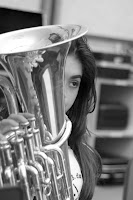
This picture is artistic.

This picture is artistic/ documenting.

This picture is documenting.
For more examples of pictures, we explored MSNBC's The Week in Pictures.
Pictionaries 11-20 and synonyms unit 4 vocabulary.
As part of getting students ready to do the PTA Reflections Contest, I discussed how I divide pictures along a continuum. It ranges from Documenting to Artistic/Documenting to Artistic based on the picture's purpose. On the documenting side, the pictures are there to, well, document. They are plain. On the other extreme, the pictures are artistic; they are pieces of art that contain colors or lighting or a variety of other characteristics that make the picture more than just a picture. In the middle is artistic documenting. These are pictures that document, but they have artistic qualities. See the pictures below. I will try to get students to think about composing a shot rather than just snapping a picture.
I am excited to see what art form the students choose. I must confess, I am hoping that students take pictures. (FYI- Students will be responsible for printing their pictures.)

This picture is artistic.

This picture is artistic/ documenting.

This picture is documenting.
For more examples of pictures, we explored MSNBC's The Week in Pictures.
Wednesday, November 03, 2010
"Together we can..."
Homework:
Pictionaries 1-10 Unit 4
"Together we can..." is the theme for this year's PTA Reflections Contest. I am getting the students started on the contest over the next few days. Then I will let them work on the project at home. The piece will be due November 23. On that day, students will turn in their piece, an application, and a 250 word explanation of how their piece explains the theme.
Here are some links:
My assignment page for the contest.
The National PTA Reflections Contest page
Monday, November 01, 2010
We are almost done all the recordings.
I plan to post what I have tonight if possible.
There is no homework.
In my section 4 class, I set up a few presentation competitions. Guess who won in each picture!
(They all did nice jobs, but one had to win.)


There is no homework.
In my section 4 class, I set up a few presentation competitions. Guess who won in each picture!
(They all did nice jobs, but one had to win.)


Sunday, October 31, 2010
More recordings are on my website.
My goal is to finish all the recordings on Monday, if possible.
Check this page to see if your child has made his/her recording.
I just got to the recordings today because I have been a little busy. I went to the Rally to Restore Sanity and/or Fear on Saturday. I left at 6:00 a.m. and got home at 8:00 p.m.. It was awesome... if you are a fan of the two shows and/or you share their views on politics and the media. If you went, send me an e-mail.

Thursday, October 28, 2010
Grade slips were given to sections 3,4,5, and HB
I gave out grade slips to show the students approximately what they are getting for the first marking period. I only have to add the score for the recording of the narrative. I might get to grade a class or two's set of narrative essays by the end of the marking period. I might just have to use the essay grades for the second marking period.
We are continuing to record our narratives. Feel free to check out the collection of recordings as it grows. I will try to update the page daily if possible. (Friday's might have to wait a little. I will be a little busy this weekend. I will be attending John Stewart's and Stephen Colbert's rallies on Saturday.)


We are continuing to record our narratives. Feel free to check out the collection of recordings as it grows. I will try to update the page daily if possible. (Friday's might have to wait a little. I will be a little busy this weekend. I will be attending John Stewart's and Stephen Colbert's rallies on Saturday.)


Wednesday, October 27, 2010
We have begun recording the narratives.
For an awesome example, please see my classroom web page. Click on Delaney D.'s audio file on the right with the picture of a storm. I was "blown away" by her writing talent.
Students should be practicing for their recordings.
I will update grades soon.
I will also be posting some more awesome examples.
Eventually, I will make a page that has ALL of the recordings so you can listen to your child.
Students should be practicing for their recordings.
I will update grades soon.
I will also be posting some more awesome examples.
Eventually, I will make a page that has ALL of the recordings so you can listen to your child.
Tuesday, October 26, 2010
The good draft is due tomorrow! Be prepared to record!
The final draft of the essay is due tomorrow. We practiced proofreading skills today.
I saw sections 3, 4, and HB today. (We had testing in 5 and 6.)
I had the students practice recording using the microphone. It is not as easy as you would think. The students don't like to project their voices. They try to rely on the mic. So I kept urging them to speak up. I told them I would do that twice and then stop when they record their piece over the next few days.
I am grading the oral presentation (25 points). Most students will get B's. To get an A, the student must have a good pace, yet pause as needed. The voice has to be loud enough and clear. But mostly, they have to sound real, like they are telling us a story. I urged the students to practice reading to someone at home. Maybe that person could sit across the room or down the hall to get the reader to raise his/her voice.
Here are the practice ones we did today if you are interested.
(Maybe your child could point out which one is his/hers.)
Section 3
Section 4
Section HB
I saw sections 3, 4, and HB today. (We had testing in 5 and 6.)
I had the students practice recording using the microphone. It is not as easy as you would think. The students don't like to project their voices. They try to rely on the mic. So I kept urging them to speak up. I told them I would do that twice and then stop when they record their piece over the next few days.
Here are the practice ones we did today if you are interested.
(Maybe your child could point out which one is his/hers.)
Section 3
Section 4
Section HB
Monday, October 25, 2010
No vocabulary this week.
The final draft of the narrative essay is due Wednesday. I spent today discussing the rubric I will use to score their pieces. We also discussed punctuating dialogue. We did some proofreading practice as well.
I would like all students to revise their papers tonight so we can get one more opportunity to fix the paper before it is due.
Here are the note I discussed today:
The goal for today is to be ready for Wednesday’s reading.
Focus on content and organization
Read your story aloud.
How does it flow?
Listener, can you follow the story?
Does it have a clear lesson learned?
Listener, what do you want to know more about?
Grammar
Spelling is usually not a problem.
Frequently confused words: there/they’re, etc.
Punctuating dialogue
John said, “I want to leave now.”
“I was wondering,” said Bill, “who will win the game.”
“I don’t really care who wins the game!”
When a new speaker begins, there is a new paragraph.
There is no vocabulary this week. We will not have time.
Upcoming grades: Rough narrative ready 5 points, Good narrative in on-time= 25 points, Read narrative to the class= 25 points if well read.
Thursday, October 21, 2010
How to improve your narrative
Homework:
Narrative due Wednesday (But I would get it done earlier!)
Today:
What can you do to improve your piece?
Outline the basic events in order.
1st, 2nd, 3rd, 4th
Do you have the basic story down?
Can you add sensory details?
Highlight 5 senses in yellow.
Taste, feeling, hearing, seeing, smelling
Can you add any thoughts?
Highlight your thoughts in blue.
Do you have thoughts of when you were
going through the event?
Do you have thoughts now that you are
older looking back at the event?
Does your piece have an overall purpose?
Why are you telling us this story?
Could you include any dialogue?
What exactly did someone say?
It brings the people in the story alive.
Wednesday, October 20, 2010
Crafting a narrative continues.
Homework:
I gave students the option to take the Unit 3 quiz open book. However, if they do, they can only earn a maximum of 85%, even if they get 100%. The other option is to take the test normally. Then they can earn 100%.
Students should be working on their narratives at home. I suggest they finish a draft as soon as possible so they can get help revising. I have finished mine. It is 1400 words. I am having some teachers read it to see if they can follow it. I hope they are harsh. I don't want to confuse people.
Today:
I discussed the idea of sea and mountain. A narrative is where the writer is standing on the mountain observing how the event fits into the larger picture of his life. For example, there was a poem I read to 500 people when I was a senior in high school. Now that I am 41, I am on a mountain looking back at that moment. From my vantage point, I see how that moment influenced me. I loved the excitement of reading in front of people.
Here is a rough outline of how I could tell the story.
Event: Read a poem at a graduation ceremony.
Lesson Learned: What I say can be heard by many. People like what I say.
Outline the basic events of your moment:
Before the event
Liked to write poetry
Wrote for fun and friends
Somehow I volunteered to be part of event coordinating
The idea for a poem came to my mind.
Showed the poem to the teacher organizing event.
He thought it would be nice to include
(I even designed the cover of the program)
During the Event
Sat on stage.
500 people- Mom, Dad, girlfriend, family (Dad almost didn’t show.)
Nervous, but did it. I have the picture Dad took.
Thoughts right after event
I loved it!
Appreciated the praise, but also amazed that 500 people heard my message!
Thoughts NOW on the event and why it matters
I am sure this is one reason I love to be on stage and write.
This is me on the mountain explaining why that event matters to me now.
Tuesday, October 19, 2010
Crafting a narrative
Homework:
Work on the narrative essay.
Study for the Unit 3 quiz. Be finished the whole unit.
Check updated grades online.
Today:
I discussed what a narrative is and what a narrative is not. First, a narrative is not a list of all the events of the moment in order. That is called a “bed to bed.” Yes, the events in the narrative can be in order, but a narrative is crafted.
Then I talked about crafting. One way to craft the telling of the story is to add sensory details. At moments, slow down and describe. Allow the reader to really sense the setting.
I also mentioned playing with time. Not every moment gets the same weight. Slow down some time and skip past others. Explode a moment like slow motion.
I also talked a little bit about flashbacks. My story is about a two minute event. However, I wrote 1300 words. During the event, I go back and explain why my event had so much importance to me. Then I come back and finish the original story.
Below is an example of the first step of planning a narrative that I will expand.
Event
Read a poem at a graduation ceremony.
Lesson Learned
What I say can be heard by many. People like what I say.
Outline the basic events of your moment:
Liked to write poetry
Wrote for fun and friends
Somehow I volunteered to be part of event coordinating
The idea for a poem came to my mind.
Showed the poem to the teacher organizing event.
He thought it would be nice to include
(I even designed the cover of the program)
Sat on stage.
500 people- Mom, Dad, girlfriend, family (Dad almost didn’t show.)
Nervous, but did it. I have the picture Dad took.
I loved it!
Appreciated the praise, but also amazed that 500 people heard my message!
Over the next few days, I will add snapshots, thoughtshots, and play with time to craft this narrative.
Monday, October 18, 2010
We have begun our narrative piece!
Homework:
Completing the Sentence Unit 3
Quiz on Unit 3 on Thursday
The narrative is due October 27ish
Today:
I reviewed the basic structure of a narrative. I explained that they start with a hook, an interesting introduction that grabs the reader. Then the piece goes through the event that is being discussed. It ends with some sort of reflection. A narrative is not just retelling a moment. A narrative is more about the writer leading us through the event and the effect the event had on him. I will discuss narrative more as we read more examples this week.
Today we read "I'm Not Ready to Be The Lord of the Wings," written by Peter Duffy. If you read this article (which I hope is there), you will see that at least 1/3 of it is commentary on the event. I will be teaching students techniques to improve their narrative writing craft.
Here is the assignment page from MrBoZ.com.
Friday, October 15, 2010
Have a nice weekend. (Finally, a pause in grading.)
I gave the interview summaries back to sections 6 and HB today as well as a grade slip. I explained that grammar errors are like losing respect points. We will continue to practice the skill, but I suggest you encourage your child to get help proofreading. We will also read our next pieces out loud. This will help them spot their awkward sentences.
As of now, all grades are updated accept for the homework and participation grades for this week. (I can never be totally up to date, but the big things are graded.)
As of now, all grades are updated accept for the homework and participation grades for this week. (I can never be totally up to date, but the big things are graded.)
Thursday, October 14, 2010
October 14, 2010
Have you checked the Home Access Center lately?
Homework:
Sections 5 and 6 should be sure to have the Choosing the Right Word for Unit 3. I did not see those classes today.
Today:
We reviewed the answers to the Choosing the Right Word.
I finished up our discussion on author's purpose for "Thank You, M'am."
Next week we will start the narrative that will be due October 27th. I want the students to think about a moment/person in their lives that they can point to as having an impact on their lives. For example, as I had the students pretend in class, Roger could look back on his encounter with Mrs. Jones and say that the time he spent with her impacted his life.
Here are my thoughts on the author's purpose for "Thank You, M'am."
What will you take away from the story? What do you think Langston Hughes was trying to say to us through this story?
We are all trying to live our lives on this planet. Some of us have it better than others. What do we do when we encounter someone who is struggling, maybe even trying to survive? I believe Langston Hughes was trying to get us to think about how we treat others who are in need.
Maybe it’s because I am an adult, but I am most moved by the character of Mrs. Jones. I am not so sure the focus of the story is Roger. He is one person who comes in and out of Mrs. Jones’s life, one among many because she works at the hair salon where she sees people all day. The wisdom and life experience of Mrs. Jones is at the heart of the story. Roger is us, the recipient of that knowledge. For all we know, that evening had very little impact on Roger. Maybe it had a huge impact on him. The point of the story is that we should help others regardless of how it might turn out.
What would you do? I have met plenty of homeless people through my church in Elkton. Three years later, many of them are still homeless and need help with food and clothing. You might ask why they just don’t get a job. If we keep helping them, how will they every get out of their situation? I don’t know the answer. But that night, Roger needed food and love. Mrs. Jones gave that to him because she has been there. She even gave him the money for the shoes that we know he doesn’t need, but she knows that he needs to learn some lessons for himself. So she gave him the money. I believe Langston Hughes intentionally left the outcome unknown. He did not say that as a result of the evening Roger changed his ways. He didn't say anything at all about Roger's future. That is the point. Mrs. Jones helped Roger because it was the right thing to do, and sometimes we just do what is needed.
Subscribe to:
Posts (Atom)

