Tuesday, March 29, 2011

Here is the basic information students should know about their magazine

Homework:
Quiz Unit 11 on Thursday

Today:
I am continuing to direct the students towards the final presentation of their magazines which is due Friday.  Here is one way to think about what they should know.

Magazine Presentation Basic Idea

You should know your magazine well enough to explain what it contains.
     Articles and features?
     Product reviews?
     Stories?
     Picture spreads?
     Why does your audience buy the magazine week after week?


Your good magazine creates an audience…
     Make a collage from some of the people in the ads.
     (In ads aimed at us, we see who we are or who we want to be.)
     What is the age range of the readers?
     What gender are they (male/female ratio)?
     What race are the readers of the magazine? Does it matter?
     What are the interests or hobbies of the readers?
     What are the hopes and dreams of the readers?
     (The ads offer the readers what they want!)

The magazine then opens their audience up to advertisers.
     The more readers the magazine has, the more they can charge for ads!

     Examine your magazine and explain how advertisers sell to your audience.
     What techniques seemed to be used the most?
     Maybe you need to see some other magazines that have the same products but sell to a different audience. For example, Hot Rod Magazine would have different ads for McDonald’s than Seventeen Magazine.

Friday's magazine presentation should look like this.

Flow of magazine presentation.

This is a collage that shows the audience of Ebony Magazine.

Monday, March 28, 2011

Advertisers target the specific audience of a magazine

Homework:
Completing the Sentence Unit 11
The magazine presentations begin on Friday.

Today:
We had some VERY interesting discussions in class today.  If you look below, you will see the categories that I asked the students to identify regarding the audience of their magazine.  As adults, we are aware that we are not the center of the Universe.  My students, however, found it interesting that a magazine could actually have an audience that is racially identifiable, Ebony for example.  We spent time today being frank about the ethnicity of the people in the ads in our magazines because, as I said before, in an ad, we see who we are or who we want to be.  We like to see ourselves in ads.  That being true, we are not all white, which means we like to see ads with people that look like we do. 

Magazines bring an audience together so that advertisers can sell to them.  I am asking the students to identify that audience.  Then I am going to ask them how advertisers sell to that specific audience.  What techniques do they use?  This becomes clearer when the same product is sold to different audiences.


Find the Audience of your magazine

Age Range: (youngest) (oldest)
Male/Female ratio:
30 % Men IIIII IIIII IIIII
70 % Women IIIII IIIII IIIIIII IIIII IIII IIIII IIII IIIII
Race: (Is it identifiable?)
White- IIIIII
Black- IIIIIIIIIIIIIIIIIIIIIIIIIIIIIIIII
Hispanic- IIIIIIIIIIIIIIIIIII
Other- IIIII

Interests/Hobbies:

Cost of the products advertised: (cheap, middle, expensive)

Family situation: (Married, single, with kids?)

Sunday, March 27, 2011

Mega Logo Day

Homework:
None.  There will be a magazine presentation this coming week.  We did not get as far as I hoped.  I will let you know exactly when it is due.

Grades:
I will be entering the last few grades of the MP today or tomorrow. We took a techniques quiz on Friday, there was some classwork, and there was some vocab homework this week.

Friday was Mega Logo Day:
The goal was to wear clothes that had as many logos on them as possible.  Either students do not have clothes with logos, which would be great, or they really didn't try. (I think it was the latter.)

Funny story.  I was not going to count the logos in section 5 because we were running out of time.  Then one student showed me her sweatshirt.  I didn't think it would matter.  I was wrong!  Her sweatshirt alone won for her class!  It had approximately 2200 logos on it!  We did not even count the other students' logos in the class.

Section     logos per student
3                55
4                17
5                124 (2200 logos on one sweatshirt!)
6                20
HB             31


Thursday, March 24, 2011

No Logo Day!

Today was No Logo Day!  Students were supposed to dress with as few logos showing as possible, excluding the H.B. logo because that is one logo we want to show.  Logos are free advertising for the company.  We did not want advertising on our outfits, so we covered them up with tape.  (And then proceeded to tape everything else in sight!)

The goal was to have no logos, but some students did not realize how many logos they actually had on them.  Some shoes had the tread design using the company's logo over and over!  That did not help the class to achieve the lowest ratio of logos per student.  Here are the results:

Class     logos per student
  3           30.6
  4             9.3
  5           21.0
  6             8.6
 HB           7.7
Tomorrow is Mega Logo Day.  Students are to choose clothing that has lots of logos.  Since there is a dress code, students who have shirts or other items that are not code must bring the items to class in a bag.  I told them to be responsible with their items!


Don't forget about the tread design!

One student had 180 logos on one shoe!

The buttons have the company's name on them.


Logos are everywhere!


This shoe will be great for Mega Logo Day on Friday!

Wednesday, March 23, 2011

Thursday is No Logo Day!

Homework:
Choosing the Right Word unit 11
20 stickies in the magazine
Techniques quiz on Friday

No Logo Day:
On Thursday, we will be placing tape over any logos that are showing on our clothing.  Today we discussed how the logos are a form of free advertising for the companies.  However, we all know that we sometimes buy things with logos because we want to say something with what we are wearing.  We want the logo to say we buy quality stuff.  I pointed out that this is group dynamics- we buy something to be a part of a group that others are not a part of.  We will count the logos to see which class has the least logos per student.

Mega Logo Day (Friday):
Students were told that they should try to wear clothing that has lots of logos if possible.  We will count them up to see which class has the most logos per student.  I told the students that they could bring a shirt or whatever in a bag because our school has a dress code.

Tuesday, March 22, 2011

Ads Ads Ads

Due:
Synonyms Unit 11
Find the 20 ad techniques in the magazine and label with a yellow sticky note.
There will be a quiz on the 21 ad techniques on Friday.  Students should know what each one is.  We are studying these each day.

Each day the students are getting better and better at identifying how they are advertised to. By the end of this unit, students will look at ads in a whole new light!

THURSDAY will be No Logo Day.  Students should wear clothes that have no logos on them.


FRIDAY will be Mega Logo Day.  Students should bring in clothes (as if they could wear them) that contain lots of logos.  That includes purses.  I do not want to deal with hats because students will try to wear them.

Monday, March 21, 2011

Continuing to teach advertising techniques

Homework:
Pictionaries Unit 11
Text/ad ratio
List of products in magazine
Students should start finding ad techniques in the ads in the magazine.

Friday, March 18, 2011

All media messages are constructed.

Homework:
None, but this coming week should be busy.
Unit 10 Quiz is on HAC.

Today:
Today we had quite a lesson.  I had the students explore why we buy one product over another.  We think that we use logic to make our decisions.  To certain extent, we do.  One product offers a better quality or price or contains something we want.  However, there are techniques that advertisers use that do not appeal to logic.  They appeal to our emotions. They convince us through artificial means of persuasion: hype, fear, repetition, to name some.

The other topic we explored was how a media message is created. There are a few videos we watched from YouTube.  We watched the video for Gwen Stefani's perfume.  We watched the ad, but then we watched the behind the scenes to show how much effort goes into creating the 30 second commercial.   (It was the best I could find in the time I had.  I made sure to keep the discussion appropriate.  I had Dr. Carmack's approval to use the ad.)  We also watched a Pantene video that shows the behind the scenes.  Even though the hair styles looked natural and easy, the video showed us otherwise!

(I wish I had the links, but I cannot access YouTube from school.  I downloaded the videos from home. I think I have the links, but I can't test them.  Better safe than sorry.)

Thursday, March 17, 2011

We are continuing our study of ads

Today we discussed the first eleven ad techniques.  They are in the yellow packet.  By now, students should have completed the text/ad ratio and listed all the products advertised in their magazine.  I also suggested they start to find examples of the techniques we studied today.  Soon, they will need to find one example of each technique in their magazine.  Each of these small assignments will help them with their big magazine presentation.

We also took unit 11 quiz today.

Wednesday, March 16, 2011

Unit 10 quiz Thursday

Students can practice for the vocab quiz using this site.

We are continuing our work on the magazine presentation that is due around March 28.  The students should be finishing up finding the text/ad ratio of their magazine.  They should also be listing all the products that are advertised in their magazines.  This unit has a series of small tasks that the students need to accomplish to be ready for the presentation.

Here is the magazine presentation web page.

For students who did not have a magazine today, I gave them one.  (Coincidentally, many students came into class with a magazine today.)

Tuesday, March 15, 2011

Students MUST have a magazine for this two week project.

For two days now, I have been asking students to bring in a magazine for a project.  I do not believe that this many students have absolutely no access to a magazine!  I have made my frustration clear to the students, and I will give them one more day.  I will give them a magazine if they need one, but that is not the point.  I wanted the assignment to be meaningful to them.

Homework:
Finish Unit 10 in the vocab.
Bring a magazine.

*** Grades are updated on HAC  ***

Monday, March 14, 2011

Students MUST have a magazine Tuesday!!!!!!

Homework:
Completing the Sentence Unit 10
Bring a magazine Tuesday

Today:
We started our Media Literacy unit.  I discussed the following questions (below).  Then we watched ads from the first commercial break of Pretty Little Liars that I had recorded.  The ads showed the things we discussed in the questions.  There is too much to discuss, and I don't have time to write it all here.  The students who are in class will receive more because I discuss ideas in detail.

I gave students a packet that we will use for the two week unit.  It they lose it, they must buy a new one for a quarter.  This is their book for the next two weeks.

I will put a link to the assignment web page soon.  I have many things I am trying to get done, including reading all the sci-fi pieces from sections 5 and 6.  One paper took me 15 minutes just to read!

Notes:
What are ads? What is their purpose?
    Show
    Persuade you to buy the product.
    Show you the need for their product. (real or imagined)

Why does a magazine or TV channel have ads?
    To make money from the commercials. (sell time)

Why does a magazine or TV channel create great content (shows)?
    The more people that watch, the more ads you sell, more money charge.
    Not to entertain you!!!!

When you watch an hour-long TV show, about how much of the hour is ads?
    20 min
    NASCAR is 100% ads- show and ads!

    Pretty Little Liars episode I have= 28% ad   72% show

How do I know I am watching an ad?
    Cut off

Thursday, March 10, 2011

Sections 6 and 3's sci-fi pieces have been graded. Check HAC.

**** Note: Sci-Fi grades for sections 4 and 5 ****

I am trying something different.  I am giving these two sections a temporary score for the sci-fi stories.  This is a score based on 3 or 4 student assessments of the piece.  I dropped the lowest score and averaged.  I feel that my score may be a little bit higher, but it might not be.  The score the students gave is in the ballpark.  It will take me until the end of the marking period to get through all the honors pieces.  Some are five pages long!  I will revise the scores as I finish scoring them.  This way you can at least have an idea of what the marking period grade looks like.  There are two weeks left!  Again, I am trying something new because I know how important up to date grades are on HAC.  Plus, I do have some scores for the pieces.  If the scores end up way off, then I won't do this again.  


There is no homework for tonight.  We spent the day typing in the lab.

Wednesday, March 09, 2011

Here are the notes we discussed in class.

Homework:
Choosing the Right Word Unit 10
Students should have an outline or a rough draft. (We will type in the lab tomorrow.)

Here is the transition handout I gave them today.

Start by trying to explain this to a partner:
        You talked with your parents about your future.
        What did you find out? Explain your findings to us.

Lame topic sentences
     My parents and I share the same goals for my future.
     My parents and I don’t share the same goals for my future.
     Even though we share many of the same goals, my parents and I have different ideas for my future.


A better topic sentence will contain a purpose for comparing.
     What did you learn from the comparison other than different or same?

     Example
    “My parents must hate me because their goals for my future are terrible!”


Outline
      You talked with your parents about your future.
      What did you find out? Explain your findings to us.

(Point by point)
TS: My parents and I share the same goals for my future.
        Me Family Parents
        Me Job Parents
        Me Education Parents
        Me House Parents
        Me Religion Parents
Conclusion: It is true that my parents and I share the same goals!

(Block)
TS: My parents and I share the same goals for my future.
      Me Family
      Me Job
      Me Education
      Me House
      Me Religion

      Parents Family
      Parents Job
      Parents Education
      Parents House
      Parents Religion
Conclusion: It is true that my parents and I share the same goals!

Tuesday, March 08, 2011

We are studying compare contrast organization.

Today we looked at the examples on this sheet.  We used markers to show the pattern of back and forth used in the point-by-point and the block organization methods.  Then I gave them time to continue working.

Students MUST have their brainstorming done for Wednesday.  I want to talk about outlining and using transitions. 

Students should also be done the synonyms for unit 10.

Monday, March 07, 2011

Parents, please supply answers to these questions.

Your child has brought home a questionaire.  Please take the time to answer as thoroughly as can. (see below)  The clearer the picture your child has of your goals for him/her, the better he/she can compare his/her goals to yours.

Compare/Contrast Paragraph Assignment

      Students, right now, your parents are trying to raise you the best they can. They have goals for you. I am sure they have even told you those goals, either directly or through the choices they make for you.
     Parents, what are your goals for your child's future? Imagine he/she is about 35 years old. Use the list of topics I have provided.  Try to give us a clear picture of what you hope for your child's future. Try to be as specific as possible.

    What is his/her job?
    What type of education has he/she received?
    What type of family does he/she have?
    Do he/she have children?
    What type of house does he/she live in and where?
    What type of community does he/she live in?
    Who are his/her friends?
    What are his/her values? (open ended)
    What is his/her lifestyle? (open ended)
    How involved is he/she in government and politics?
    What role does religion play in his/her life?


We are writing a compare/contrast paragraph with the following requirements.  The students will have two days in the lab this week to complete this.  It is due Friday.

Requirements for the compare contrast paper
(Y | sort of | N) Your paragraph should start with a clear topic sentence
                         with a purpose.
(Y | sort of | N) Word count must be between 250 – 300 words.
(Y | sort of | N) You must have 15 transition words underlined.
(Y | sort of | N) There should be no spelling errors.
(Y | sort of | N) You should have no more than two grammar errors.
(Y | sort of | N) Your paragraph should end with a clear conclusion sentence
                         that makes a statement. Don’t just say, “… and now I have
                         shown you the difference between…”

Saturday, March 05, 2011

The science-fiction writing unit is done. Quiz 9 scores posted.

 To wrap up the science-fiction writing unit, we watched an episode from Ray Bradbury Theater called "The Long Years."  The video comes with the book series  Mrs. Watson and I teach from. This website gives a nice summary of the story.

The episode is uploaded on YouTube if you would like to see it.

Here are some of the questions we discussed.

Author's purpose: What are we supposed to get from the story?

We discussed this exchange:
    Captain: You have been living with your memories for 20 years.
    John: That’s all we have. Is that such a bad thing?
    Captain: I don’t know.

We discussed how the wife reacted when her husband died:
    Captain: Do you feel OK?
    Cora: The worst thing for anyone to feel is sad or lonely.

What does the movie tell us about what it means to be human?

What is Bradbury saying about holding onto our past?

 We all have had someone leave us.  What if we could recreate that person from our memories and live with him/her?  Would that be satisfying?  In the movie, we see that the main character is still lonely.

Next week, we write a 300 word compare/contrast paragraph.

Thursday, March 03, 2011

Here are the winners of the science-fiction judging we have been doing in class:

Today we read the winners from yesterday.  Each paper was scored by two students.  The two scores were averaged together.  The highest average could be a 5.


Winners!
4.8   Jared S.
4.7   Jackie D.
4.7   Emma B.
4.6   Cynthia H.
4.6   Nick M.
4.6   Gabe O.
4.6   Emma S.
4.5   Matt C.
4.5   Shannon M.
4.5   Erin W.
4.5   Shirley H.
4.5   Matt Mc.

There is no homework tonight.  (I'll be watching American Idol.)

Wednesday, March 02, 2011

The first round of science-fiction story scoring is done!

Homework:
Quiz Unit 9 tomorrow

Grade slips were given to sections 3, 4, 5, and HB.  My printer ran out of ink for section 6.

The students read two stories and picked the best one.  Here are the names of the students who are going onto the second round!  Tomorrow, we cut this list in half.

Chandler A.
Mike A.
Emma B.
Carley B.
Samantha B.
Matt C.
Marissa C.
Naikerra C.
Ameena C.
Andrew C.
Delaney D.
Pheobe D.
Jakie D.
Taylor D.
Mike F.
Wilson G.
Brianna G.
Joey G.
Michelle H.
Shirley H.
Cynthia H.
Orion H.
Raniya I.
Rachel J.
Sarah J.
Katie K.
Joy L.
Ariella L.
Ryan M.
Gabby M.
Shannon M.
Nick M.
Marissa M.
Robert M.
Matt M.
Gabe O.
Sean R.
Emma S.
Sean S.
Charlie S.
Jared S.
Joel T.
Adam U.
Luis U.
Ashley V.
Erin W.
Gabe W.

Tuesday, March 01, 2011

We start judging the stories tomorrow!

Interims were entered today based on the grades on HAC right now.  I will enter more grades soon.

Today we read a story and applied the rubric (see a few days ago).  We agreed that it would score a 4.0 or a 4.2 (4.5 being an A-).  One category that it lost points in was the dialogue.  The stories were supposed to have 15 exchanges. (I would have given it a 4 in dialogue because there were 11, and they did help establish the characters.)

Homework:
Students should be finished unit 9 and be studying for the test on Thursday.

Monday, February 28, 2011

Good drafts of the sci-fi story were handed in today.

I collected the stories today.  I will need a few days to organize the class readings of the stories.  We will spend our week preparing for the unit 9 vocab quiz and starting a compare/contrast paragraph to study transition words.  More details will be on the assignment page when I get it up.

Interims are entered based on the grades in HAC as of today.  More grades will be entered this week. 

There is a lot going on in my class... as always.

Homework:
Choosing the Right Word for section 6

Completing the Sentence and Flashcards for sections HB and 3

Completing the Sentence for sections 4 and 5.

Friday, February 25, 2011

The good draft of the sci-fi story is due Monday.

Handing in the essay on-time is not only important, it is a grade. 
I need the essays in so I can start pairing them up for the competition.  I am going to have students read the stories and decide which ones are the best.  By the end of the week, we will have some winners!

I really like this piece because it is one of the few pieces that allows imagination.  Where do the fiction writers on the best-sellers list come from?  Well, after reading some of my writers, I would like to think that maybe I helped the process along.  :)

Have a nice weekend.

I will be entering some grades this weekend.  I will enter the interims by Tuesday.  I hope to give students a grade slip by Wednesday.

I updated the rubric for how the essays will be scored.  Please see the entry on 2/23.

Are you up for a challenge? 
Check out this piece of writing.  Can you find the errors?  In class, we divided this into five paragraphs and found around ten corrections.

The other hovercrafts arrived, and twelve soldiers came together and nodded to Asad. “OK”, Asad said fiercely, “Let’s get this over with, just talk with them, no shooting or stealing, got it! A loud, “Yes, Sir!” rose up from the group. Asad second in command Khalil came up to him and asked in a quiet voice why he seemed so angry. Asad looked at him and said, “You know I hate this job” “Yeah well I sometimes feel the same, but orders are orders, so just kept it together for a little while longer.” Asad nodded and he and the rest of the men including Khalil marched up to the savages.

Wednesday, February 23, 2011

Sci-fi rough draft due Thursday

Here are some notes I discussed today.


Science-Fiction Story Rubric

Read the story from start to finish before marking any of these.

Story Telling
5(a) = Gripping story, developed characters, action moved to a climax.
4(b) = You were curious about the end, some characters, conflict present.
3(c) = It was a story, had characters, some conflict.
2(d) = It was barely a story. It did not go anywhere.
1(f) = Unacceptable

Was it a science fiction story? (Author's purpose was clear.)
What is the writer’s purpose/lesson about technology? Will science be the savior or the destroyer? What do we need to be doing right now to attain or avoid this?

5 = The writer made you really think about the future of some science idea.
4 = The story contained some type of science idea and its future.
3 = There was some science thing in the story.
2 = It was just a story.
1 = Unacceptable.

Dialogue
5 = Excellent use of dialogue for effect and character development.
4 = 15 exchanges with mostly correct indenting, punctuation, paragraphing.
3 = Not enough exchanges and/or incorrectly punctuated.
2 = Barely used dialogue and/or totally incorrect punctuation.
1 = Unacceptable

Sensory Details and Thoughts
5 = Vivid setting and details. You feel immersed in the story.
4 = Many sensory details like feel, see, smell, and some thoughts.
3 = Some sensory details like feel, see, smell, and some thoughts.
2 = Not very descriptive. The story was mostly just plot details.
1 = Unacceptable

Grammar
5 = Almost perfect. Very few errors
4 = Some errors. They were minor and did not distract. Writer proofread.
3 = A few too many errors. Many should have been caught.
2 = Proofreading appears to have been skipped. Distracting errors abound.
1 = Seriously?

Total: ________ divided by 5 = average
4.5 = A
3.5 = B
2.5 = C
How do you punctuate thoughts?
        “That will be $31.04.”
        Maddie dug through her purse, hoping to find the four pennies. Since when did feeding sandwiches to three kids end up costing over thirty dollars, she mused as she gave up on the pennies and handed over two twenty dollar bills to the cashier.


Use italics sparingly to indicate thoughts
       Maddie dug through her purse, hoping to find the four pennies. Since when did feeding sandwiches to three kids end up costing over thirty dollars? she mused as She gave up on the pennies and handed over two twenty dollar bills to the cashier.

Punctuating thoughts is not totally necessary.
        “That will be $31.04.”
          Maddie dug through her purse, hoping to find the four cents. Since when did feeding sandwiches to three kids end up costing over thirty dollars? She gave up on the pennies and handed two twenty dollar bills to the cashier, continuing her musing as he got her change.

(You don't need to punctuate thoughts like you would actual dialogue, especially when you're writing from the individual's point of view. It doesn't matter if it's first person or third person, you are obviously writing from Maddie's perspective. Because of that, things like "The sky was really blue that day" or "Since when did feeding three kids sandwiches get so expensive?" are both her thoughts and are just additions to her perspective of the world around her.)

The whole goal of punctuation is to help the reader follow what you are trying to say! If it is obvious that it is a thought, then just write the thought. Your reader will follow you.

Save “Quotes” for spoken dialogue. Use thought cues (He thought…) for thoughts.
(http://www.absolutewrite.com/forums/showthread.php?t=123312)


Start a new paragraph…
           every time you switch speakers.
          when you switch what you are talking about.

Think about television. 
          When a character is speaking, the camera is on him/her. All the action and dialogue that concerns that character is in that camera shot, including description of what is going on around him/her. If a new character speaks, the camera focuses on the new character. When people speak, there is a natural back-and-forth. Your written words have to show this back-and-forth visually using new paragraphs.

           Don’t be afraid to use too many paragraphs. It is when you use too few that the back-and-forth gets lost and the reader looses focus.

Thursday, February 17, 2011

Interims are approaching. The rough draft MUST be turned in on-time!

There are only a few grades in the book right now due to the weather and other interruptions.  Right now we are spending our time focusing on how to write a sci-fi story.  We are not doing vocab, nor are we doing activities that are graded.  The grade on the story will be very big for this marking period.  If a student does not hand in a rough draft, the early grade will be affected greatly.

(The rough draft should be closer to a good draft than to a bunch of scattered notes and half-written pages.)


If you would like to help your child be prepared for a good grade, you could help him/her with a few things before the rough draft is handed in.  There should be at least 15 dialogue exchanges which are punctuated correctly.  The story should be a reasonable length with no grammar errors.  Ideally, the story should be gripping with a strong beginning and a clear author's purpose.  You can see examples of great stories at the bottom of the assignment page.

Wednesday, February 16, 2011

We continued to discuss how to write the sci-fi story

I discussed the idea of adding sensory details, dialogue, and thoughts to the basic storyline.  We read half of an example story which demonstrated the ideas I taught.  In one class, I showed them how they could make a chart.  The middle column is the main story in a skeleton form.  The other columns add details.  Instead of one short sentence about the main story, there are now multiple sentences that make each section more vivid.


Tuesday, February 15, 2011

Students should be working on their science fiction stories

Today we reviewed the answers from their brainstorming sheets.  (See the previous blog post.)  In some classes we paired up, and students had to present their story idea like a movie producer.  In some classes we discussed ideas as a class.  Then I gave the students time to write.

I was discussing how students could get started if they could not figure out a story.  I asked them to write down all the things they do from waking up to going to sleep.  Then inject their new technology into that day!  How would the modern technology change the way they do things normally?  Well, that is kind of what a sci-fi story does. We get to see ourselves in a setting that is not our usual. 

By now students should have some sort of an opening scene.  The opening to the story establishes the main character and his/her motivation.  I told them it was like a curtain opening on a stage.  As the audience rests their eyes on the stage, the story begins.  For a a paragraph or so, the audience is being introduced to a setting or a character. 

We will discuss more ideas as the week goes on.  I expect students to work on their pieces at home.

We have DCAS Wednesday, so I will not see sections 4 and HB.

Monday, February 14, 2011

We did not present our technologies today, but...

I would like to hear story ideas tomorrow.  I realized we were not where I thought we should be, especially in section 6.  Here are the questions I had them complete today.  We will spend lots of this time writing.

Science Fiction Story Brainstorming
Describe a problem that you want to make us think about or offer a solution for.
Describe the technology in your story.
   What is it?
   How does it work?
   What are the current uses of your technology?
How is technology the solution to the problem (or cause the problem)?
What is your story idea:
What is the setting? (Year, location)
Who is the main character?
What is his/her goal or hope or motivation?
How is he/she being kept from his/her goal?
What is your (author’s) purpose?
What do you hope we will do as a result of reading your story?
How are you going to draw us into your story quickly?
(Start in the moment? Ask us a question? Other?)
 How much time will your story cover? How will you deal with it? Watch out, it could jump around too much! Shorter amounts of time will work better. Try to have your story about some incident… or two. (You can give details in flashbacks if needed.)


Here are some suggested writing topics for those who are struggling.

Sucked into a computer
You have been physically sucked into your computer. Not only can you see everything being done on your computer, you are also able to leave your computer and travel through the Internet and view what others are doing on their computers.

Portable communications devices and use in future
This piece will be a mirror for us to examine what we do on our computers today. Do we need to worry about where our habits will lead us to in the future? Is there something we need to change before it is too late? Do you want to show us that we have nothing to worry about?


City of the future
Find a picture on the Internet of someone’s vision of how we will be living in the future. Stare at it! Imagine living there. Now think about the city and how it functions, how it is constructed. How is this city different from what we have now. Why is it designed like it is? What problems do we have today that you imagine they have solved in the future?

“Think different”
Imagine something we don’t have today that you hope we will have in the future.

Write a story about a computer that dreams.

Friday, February 11, 2011

Monday's Technology Presentation

Monday’s Presentations: Make us dream!
You will be presenting the technology that will be included in your science fiction story.

Maybe you want to start by explaining a problem that your technology will fix.
     Then go on to explain the solution and the technology.
         What is it?
         How does it work?
         What are the current uses of your technology?

Maybe your setting is the main focus of your science fiction story.
     Describe the setting in detail.
     Why that setting?


For both of these, you might want to discuss your idea for your story.
     What is your author’s purpose?
      Do you want to offer us hope or make us rethink what we are doing now?

Here is the story I am writing:

Virtual Burial, Inc.
Problem: We are running out of room to bury physical bodies.

Technology: Digitizing a body (digitizing physical objects)

Solution: We could send the physical body by network to be buried on another planet or location on Earth, or we could store the digital body on a server somewhere, like a file, so we could visit it- like opening a Word document. There would be a virtual cemetery, like a Facebook.

Story idea: The idea is being implemented. Things are going along well for a while. Then bodies start showing up incomplete. Data is being lost somewhere. You might think no one would care because the people are dead anyway. However, the company made a promise to its customers to bury the bodies in soil. Later we find out that data is being intercepted and organs are being harvested and sold. Parts of the bodies are being undigitized and the organs reused!

Author’s purpose: I want us to think about the vulnerabilities of our current system of data transportation. It would also have us think about the value we place on the dead after life has left the body.

I got the idea for this from a variety of sources. 
  • The story combines ideas like digital transport from movies like Star Trek.   
  • Traveling through the Internet is from movies like Lawnmower Man and an episode of Fairly Odd Parents where Timmy goes into the Internet.  
  • The problem of burial space is from Japan where space is a premium.  
  • The idea of having to bury a body is from the Jewish religion that believes the body must be returned to the ground intact.  
  • The error idea comes from packet sniffing, which is capturing data packets on a network.  

Trying to come up with an original idea is hard.  That is why I am combining technologies into a story that is like a modern day grave robbing scheme.

Thursday, February 10, 2011

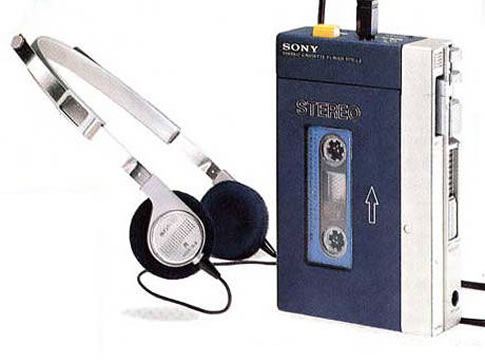
Do you remember this?  I had one back in the early 80's.  At the time, these cassette players were revolutionary.

Check out the rest of the walkmen devices here.

Now look what we have!  Thirty years later, the iPhone is the ultimate communication/ entertainment device.  As I explained to the kids today, 30 years from now, their children will be laughing at the iPhone4 that we thought was so awesome!

I am asking the students, then, to dream up the ultimate device.  They are to overcome the limitations of the iPhone: holding it in your hands, touching it with your fingers, looking at a small screen.  They need to show me the perfect device, which means they will have to make it up!  That is exactly what sci-fi writers do.

If you want to giggle, look at this video as if you are in the future.  Listen to how "revolutionary" they make the phone seem.  Trust me, this device will be a blip in the history of phones!

Wednesday, February 09, 2011

Sci-Fi setting

Today we discussed how the setting of a sci-fi story can be just as important as the storyline.  We looked at two scenes from Wall-e.  The storyline of Wall-e is pretty straight forward: Wall-e wants to get EVE back.  Where the story takes place and what the setting says about us as humans living on earth now is almost more important than what Wall-e is doing!  The setting is earth 700 years in the future.  We have exhausted our resources and have been living a useless life of luxury on a spaceship.  The author's purpose is to show us that if we do not change how we are living now, there will be some serious consequences.


Here is the worksheet we did in class today.

Here is a picture of a future world.  I asked the students to dream.  What is this?  Where is it located?  Why was it built?  This place could be the setting of hundreds of storylines!
 

Tuesday, February 08, 2011

What if...?

Science Fiction Writing
The question I am getting the students to think about is What if...?

Today we watched two quick (appropriate) scenes from the movie the Matrix.  Here is what we discussed:

Up until now, the main character, Neo, felt like there was something bigger than this world. He had this idea of the Matrix in his head, but he did not know what it was. Before this scene, he was violently flushed out of his living chamber, he has been revived physically, and now he is going to be told the truth about his life.

All the technologies in this scene exist in some form now. The movie just asks What if…? How does the story give us a glimpse of how our present-day technologies could turn out?

What if… we allow Artificial Intelligence to have self-rule?
What if… we could live inside a computer?
What if… we needed to scorch the sky?
What if… we are living in a computer right now? Would you know?

The students need to be thinking about a technology that they will include in their science fiction piece.
On Monday, the students will need to discuss these questions:
Explain the technology.
What does it do?
How does it do it?
What are its current uses?
What problem does this technology solve, or what problems might this technology create?
What if ...?

We also went to the Book Fair.

Monday, February 07, 2011

A few grades are in HAC and we have started the sci-fi piece

Friday:
We were in the library trying to find a technology that will be worked into the science fiction piece.  We also took the Unit 8 quiz.  We will take this coming week off from vocab.  We have the book fair Tuesday and DCAS one day. 

Homework:
The main assignment due now is a presentation on Monday January 14.  Students will present some futuristic technology to the class and give us an idea of how they will work the technology into a story.  I will make the assignment clear throughout this week.  Students should be researching cool technologies.  I have links on the assignment page.

Here is the science fiction assignment page.

Due Dates:
February 14- Present your technology to the class
February 23- Rough draft of the story is due
February 28- Final draft is due
Classroom judging begins!
Winners will be determined!

Thursday, February 03, 2011

Unit 8 vocab quiz Friday

If you would like to have your child practice for the vocab quiz, please go to this page.  There are flashcards and a practice test there.

We have started the science fiction unit.  There will be more information in the following week.  But you can check out the assignment web page.  There is lots of information there.  I will finalize the due dates soon.  At this point, students should be thinking about a really cool technology that they can work into a fiction story. 

Today we read an article on a technology that can get an image out of the reflection in an eyeball from a photograph.  Another technology in the article explained how they can use a camera and a computer to track the exact direction someone is looking.  I then asked them to brainstorm a few questions.  We will finish this activity up tomorrow.

Eye tracking technology:
1. It can recreate the picture found in someone’s eye.
2. It can track the exact direction someone is looking.

How could this technology be used?
Advertisers?
Game developers?
For handicapped people?

What are some ways these technologies could be used for good? Evil?
What about world domination?

Combine this technology with another technology. Now what?

If this technology becomes successful, what might the future look like in 50 or 100 years?

Wednesday, February 02, 2011

The punctuation unit is over!

Homework:
Completing the Sentence Unit 8
(Flashcards for section 6)

Today:
Since we have come back from winter break, I have been trying to get through a punctuation unit from our book.  Today we reviewed the practice test we took on Monday.  We discussed the answers, and I reviewed the rules.  Then we took the test.  We are done!

The test scores are on HAC. 

There will be a quiz on unit 8 on Friday.

Monday, January 31, 2011

Punctuation Quiz on Wednesday

Homework:
Choosing the Right Word unit 8

Today:
We reviewed the words from unit 8 and the synonyms.
We did the last lesson from the punctuation unit.
We took a practice test on punctuation.  This test looks like the real one on Wednesday.
Tomorrow we will review the answers and do some online practice to get ready for the test.


Here are some exercises I will using tomorrow.

Tuesday, January 25, 2011

January 25, 2011

Homework:
Pictionaries 1-20 unit 8
Noun/verb/adjective chart for the unit 8 words

The quiz will be February 3.

Today:
We listened to the words from unit 8.
We discussed the words briefly.
We continued our unit on punctuation.  If all goes well this week, there will be a test on Friday.  Then we will move on to something a little more fun than vocab and grammar.  :)

Monday, January 24, 2011

January 24, 2010

Today in English class, we took the vocab final.  This is the same test the students took in September, and it is the same test they will take in May when we finish the book.  I went through the test and determined that there are 45/100 questions that include words we have covered so far.  So I guess you could say that a student should get a minimum of 45%.  I will post the scores on the HAC, but they will not count for a grade.  I will post how much they improved since the first test as well.  I will do this before the end of the week.  I need to finish entering the grades first.

There is no homework tonight.

Friday, January 21, 2011

The second MP grades are done. Check them on the HAC.

On Monday, we will be taking a mid-term of sorts.  I gave the students a test in September.  It is the actual final they will take in May.  Now they will take it halfway through the book.  I should see an increase in their scores.  If the students want to study, I would have no problem with that.  However, I just want to see what should happen naturally. 

Today we took the unit 7 vocab quiz and practiced apostrophes.

Have a nice weekend.

Thursday, January 20, 2011

Quiz on unit 7 Friday (tomorrow)

Tomorrow is the last grade of the 2nd MP.  

I did not grade the homework this week.  I was stressing to the students that the purpose of homework is to give them practice so they can be prepared for the quiz.  I suggested students make flashcards.  There are some links on my main site where students can practice their words.

As far as classwork goes, we are continuing to study punctuation.  It's pretty dry stuff:  I teach a quick lesson, they do a worksheet, and we review the work.  Sometime next week we will take a quiz to see what they have learned.  Then we begin our sci-fi creative writing unit. 

Tuesday, January 18, 2011

The second MP is winding down.

I entered grades from last week into the HAC.  There are only one or maybe two grades left.  The main grade is the quiz on unit 7 this Friday.  Please check the HAC to see if your child is missing something.

Today:
We practiced finding the main idea. 
We listened to the words from unit 7.
I gave them class time to work on the homework, which is substantial.

Homework:
Pictionaries
Synonyms
Noun, verb, adjective chart.

Is your child scoring low on the vocab quizzes?  Here are two links you use to give him/her practice:
http://www.sadlier-oxford.com/vocabulary/games.cfm?sp=student&level=B
http://www.vocabtest.com/vocabulary_workshop/level_b.php

Thursday, January 13, 2011

Quiz on Unit 6 words Friday!

The quiz on Unit 6 will still be held on Friday.  Students are expected to be ready.  I assigned flashcards.  The word should be on the front, and the definition and part of speech will be on the back.  We spent the class reviewing vocabulary to get ready.

I handed back the ant essays in sections 3, 4, 5, and 6.  The HB section is almost finished.

Wednesday, January 12, 2011

Lots of snowday grading done!

 (About 7 hours of seat time.  That doesn't even in include the 2 hours from last night.)

I have now graded the ant essays from section 3, 4, 5, and 6.  Please check you child's grade on the HAC.  I will hand the essays back tomorrow or Friday.  Those students who have not turned in the essay yet will only get half credit as of now.

I am still having the quiz on unit 6 on Friday.  Students should have their choosing the right word, the synonyms, and even the completing the sentence done for tomorrow.  This way they will stay on track.  There was also a dialogue handout that I gave them Tuesday that needs to be done for tomorrow.

Tuesday, January 11, 2011

Have you checked the Home Access Center lately?

The end of the marking period is approaching, and the vocab assignments are adding up quickly.  Please help you child by encouraging him/her to get in his/her make-up work.

Homework:
Choosing the Right Word unit 6
Synonyms unit 6

Today:
We reviewed unit 6 words.
We had a daily drill on the semi-colon.
We continued to work on punctuating dialogue.  The students will need to know how to punctuate dialogue for the next written piece, a science fiction story. I asked the students to finish up a worksheet I gave them for practice.

Here are the vocab words divided into parts of speech.  I think doing this helps the students to see how the word functions.  They should not be learning the words rote.  They should know how to use the word in a context.


Noun
(person, place, thing)
Verb
(action)
Adjective
(describer)
an
He is a dupe.
a makeshift
a preview of the movie
a snare
do your utmost
his vengeance


to
to browse the internet
to dupe someone
to eradicate the cancer
to frustrate the teacher
to prescribe medication
to ­preview the play
to scrimp on luxuries
to snare a fox

a ________ noun
an anonymous writer
a dynamic­ speaker
the doctor’s grim face
the inimitable style of dance
a makeshift shelter
his marginal grades
the pending­ decision
a prominent feature of your face
Grandma’s quaint house
the reluctant witness
your utmost effort

Monday, January 10, 2011

Monday, January 10, in Mr. Bosler's class

Homework:
Monday night: Pictionaries 1-20 unit 6 and three-column chart (divide the units words into nouns, verbs, adjectives)
Tuesday night: Choosing the Right Word
Wednesday night: Completing the Sentence
Thursday night: Finish the unit and study for quiz
Friday: Quiz on unit 6

Today:
We reviewed the comma rules from Friday's class using the responders.
We listened to the words from unit 6.
We discussed the following punctuation rules for dialogue and worked on correcting the exercise at the end:

Sample to explore:
“Flowers have meaning,” said Sophie.

Sophie said, “Flowers have meaning.”
“Flowers,” Sophie said, “have meaning.”
“Flowers have meaning,” said Sophie.

“What do flowers mean?” I asked.

Do flowers tell “secret messages”?
Did you say, “I am the coolest guy”?
Did you ask, “Are you going today?”

“A rose,” he said, “means love.”

“A rose usually means love,” he said. “Sometimes it means treachery.”


Exercise page 261
The Language of Flowers
(Be sure to indent.)

     “I want to send Megan flowers,” Jay said.
     “Are you nuts”? asked Dan. “She’ll think you like her.”
     “I do,” said Jay, and I want her to know it. Now help me look up in this book which flowers mean what.”
     Dan agreed that “he would help.”
     “Look!” said Jay. Irises mean faithfulness and courage.”
     Dan suggested that “he send pansies,” which mean “I’m thinking of you.”
     “Good,” Jay said.
     “Geraniums,” said Dan, “mean happiness”.
     Jay decided “he had enough ideas.

Saturday, January 08, 2011

Grades are updated on the Home Access Center

I entered some grades for this week's work and the coins in the jar responder thingy I do (only counts for some extra credit points at the end of the MP).  However, I forgot the sheet that had an important grade on it- if the persuasive ant essay was handed in.  That was due before break anyway.  I will enter that grade Monday.  I plan to grade the essays this week.

By the way, has your child purchased a yearbook?  They are $29 and only on sale until the end of January.  After that, they will not be available.  www.jostens.com 

Thursday, January 06, 2011

I haven't posted in 2 days. Sorry about that.

Homework:
Study for unit 5 vocab quiz.
I offered extra credit to sections 3, 6, and HB if they make flash cards (and use them!).

Over the last three days we have been studying vocab and punctuation, specifically commas.  Here are the notes we discussed in class:

Lesson 2: Commas in sentences
Copy this sentence
Commas are used to make the meanings of sentences clear by separating certain elements of the sentence.

Commas in compound sentence
Use a comma before a conjunction that joins independent clauses in compound sentences.

The ancient Egyptians’ written language was called hieroglyphics, and it was not decoded for many centuries.

In ancient times, scribes could read and write hieroglyphics, but most other Egyptians could not.

Scribes passed rigorous examinations, or they were rejected as scribes.

Compound verb
Scribes could read and write hieroglyphics.


Adding commas between adjectives
Hieroglyphics used colorful, decorative symbols.

These symbols were often painted with brilliant gold paint.


Commas with Appositives
Use commas when the appositive adds extra information; do not use commas when the appositve is needed to make the meaning clear.

Jean Champollion, a French scholar, deciphered the Rosetta stone.

The French scholar Jean Champollion deciphered the Rosetta stone.


Commas to avoid confusion
Notice how, without the visual clues, you just want to burn through the sentence.

Unclear
Before hieroglyphics records were not kept on stone or paper.

After we studied hieroglyphics were less mysterious.


Exercise page 255
(Insert 10 commas.)

Think of this readers when you have your next haircut. A Persian king had to get a message to his military leader a Persian general. The king shaved a man’s head tattooed a message on his bare scalp and told the man to let the hair grow back. The man then traveled to find the general but no one knew he carried the message. When he reached the general however he delivered the message. Yes as you guessed it he had to shave his head again.

Monday, January 03, 2011

Break is over! Work? I have homework already?

Homework:

Monday night: Pictionaries 1-20 unit 5 and make a chart dividing the words into nouns, verbs, adjectives
Tuesday night: Choosing the Right Word unit 5
Wednesday night: Completing the Sentence unit 5
Thursday night: Finish the unit and study for the Quiz
Friday: Quiz on unit 5

We will do the same next week.  I told the students that we will spend two weeks just doing vocab and punctuation practice.  We need to catch up on the vocab.  We are about two units behind where I usually am by this time of the year.

Today we did the diagnostic for punctuation.  All students need to review or learn these punctuation rules!  I am sure after the unit is done, their scores will be a little better! (A few questions were a little nit picky, though.)

Tuesday, December 21, 2010

The ant debates are over and the essays are handed in!

(Can you guess who won the last ant debate of the year?)

I love the ant debates, and I know the students will not forget them.  However, the unit is a lot of work.  Getting the students to research and think deeply this close to the break is a challenge, but it is worth it!

I updated the Ant Debate assignment page.  If you scroll to the bottom, you will see the winners in each class.  I always find it interesting how the students think that the squishers have no chance of winning because it seems obvious that the ant should not be squished.  However, I tell them to think of the debate like being a lawyer.  Your job is to argue for one side whether you agree with the position or not.  As you can see, there were plenty of squishers who won!

I am looking forward to a break.  I am not sure if I will grade the essays before the new year.  I will take them home, but I make no guarantees.  :)


Have a nice holiday and a happy new year!
-MrBoZ


Monday, December 20, 2010

Final draft of the ant essay is due

Today we tied up some loose ends.  I gave grade slips out to sections 3, 6, and HB.

We are watching The Ant Bully and answering some questions:

  1. How are humans and ants alike?
  2. What details did you see in the movie that are supported by details that we learned from research and the debates.
  3. How do you change prejudice?
  4. How are ants an example of "Together we can...?"
  5. What is foreshadowing?

Friday, December 17, 2010

The debates are mostly over.

The good drafts of the essays are due by Tuesday.


This is what the action looks like from the audience.


These are the winners.  If you click on the picture or download, you can zoom in and read.

Thursday, December 16, 2010

The debates are rolling along!

Check out this score!  (Trust me.  It's amazing!
The average score from all my classes is around 23. A 100% grade is earned at 40.)

Wednesday, December 15, 2010

Rough draft of ant essay due Thursday

Check out the score of this debate!  If a student scores 35 points, I am impressed.  Most students score between 20 and 30 points.  As I said in the beginning of the unit, only the winner receives an A.  However, a student has to earn 30 points for an A-.  This student was off the chart!

(His pointing and laughing is not very Barney-like.)

Tuesday, December 14, 2010

Rough draft due Thursday instead

We had more debates today.  The winners are going crazy on my board!

Monday, December 13, 2010

We are getting some winners for the ant debates!

The rough draft of the essay is due Wednesday.

Friday, December 10, 2010

Grades are updated on the Home Access Center for 2nd MP interims

Have a nice weekend!
(Laugh at life, not the grades... unless necessary!)

The ant debates start Monday!

Parents, I would suggest you sit down and have your child go through his/her main arguments as a practice presentation.  When he/she finishes, try to ask  a few questions to see if your child is ready for his/her opponent's reasons.  Good luck!

Here is everything you would need to know about the ant debate project.
http://www.mrboz.com/MrBoZ/Ant_Debate_2010_11.html

-MrBoZ

Thursday, December 09, 2010

The outline is due tomorrow.

These are some things I discussed with the students today in sections 3, 4, 5, and HB.


……………Handshake………………………………………………………………………
……………………..The boy in the story has a decision to make: should he squish the ant or not? After researching ants and exploring the topic, I am going to prove to you that the boy in the story should squish the ant. He should squish because reason 1, reason 2, reason 3.


Ideas for interesting handshakes:
Dramatic lead
     - Like the name says, they are dramatic. They grab the reader.
Begin at the end
     - Say the result of the moment. Then go back and explain it.
Misleading lead
     - Start off on the wrong direction. Then surprise the reader.
Question
     - Start off with a question that will be answered by the piece.
Intriguing detail
     - Give a small detail that is important to the moment.
Sentence fragments
     - Give description of something in snippets. Establish a feeling

Wednesday, December 08, 2010

Check out the awesome work that I am submitting for the PTA Reflections Contest!

http://www.mrboz.com/MrBoZ/PTA_Reflections_Pictures_2010-11.html

There are some literature pieces as well. 

Good luck, guys and gals!

-MrBoZ

I continued to discuss the importance of understanding both sides of an argument

In all classes, we looked at examples of persuasive writing.  In sections 3, 6, and HB, we read a simple version of the ant essay they will be writing soon.  In sections HB, 4, and 5, we read a persuasive piece based on the picture book "Earrings" by Judith Viorst.  The writer of the piece not only showed that she understood both positions taken in the book, but she then went on to make a logical recommendation for the parents in the book. 

We discussed how persuasion should be based on logic.  However, in reality, when logic can't win the argument, we resort to artificial means of persuasion.  In the book, the nine year-old girl resorted to begging, yelling, and threatening the parents that she won't stop asking her parents for earrings until she gets what she wants. 

Once the debates start, I am always amazed at how the initial logical arguments soon degenerate into quibbling over minor points just to appear as if they are winning. 

Tuesday, December 07, 2010

This is the outline that I gave the students today.

Paragraph 1
The boy in the story has a decision to make: should he squish the ant or not? After researching ants and exploring the topic, I am going to prove to you that the boy in the story should squish the ant. He should squish because reason 1, reason 2, reason 3.

Paragraph 2
The results of your research.
1. The first reason he should squish the ant is because ….
      - why is it so bad?
      - how does this relate to our ant?
      -
2. The second reason he should squish the ant is because…..
     - what do you mean?
     - how does this relate to our story?
     - why should ours be squished?
3. The third reason he should squish the ant is because….
    - how?
    - Why does this matter?
    - How does this relate to our story?

Paragraph 3
Explain how you fully understand the other position.
    Reason for not squishing the ant.
         Why do they feel this is the correct thing to do?
    Reason for not squishing the ant.
         Why do they feel this is the correct thing to do?
    Reason for not squishing the ant.
         Why do they feel this is the correct thing to do?

Paragraph 4
Explain how their argument is wrong.
    They said that …, but they are wrong because …
    They said that …, but they are wrong because …
    They said that …, but they are wrong because …

   Add any strong arguments that you feel are needed.
   Maybe you want to end with a bang!

P5: Conclusion
I have proven to you that the boy in the story should (not) squish the ant. He should (not) squish because reason 1, reason 2, reason 3. I have also discussed how… (list some of the points you covered in the part where you refuted the other side.)

Monday, December 06, 2010

Mr. Bosler's E-mail list recipients...

You may not have received some daily e-mails because I did not understand a setting somewhere.  Please see my blog if you want to know what I have posted lately.  Sorry about that.
-MrBoZ

All the research is done. This week, we organize!

Homework:
Students should be organizing their debate strategy.

Today we discussed the beginning of the debate focusing on the first round.  As you can see below, the first found starts with an introduction.  This introduction has a handshake, a thesis, and a direction.  I discussed what each of those terms meant.  I will teach the students how to modify this introduction to make it better.

I also discussed the outline below.  Students need three or four well explained reasons to support their position.  (I checked their notes and bibliography today.  I will post those grades in HAC tomorrow afternoon.)

Paragraph 1

The boy in the story has a decision to make: should he squish the ant or not? After researching ants and exploring the topic, I am going to prove to you that the boy in the story should squish the ant. He should squish because reason 1, reason 2, reason 3.

Paragraph 2
1. The first reason he should squish the ant is because ….
- why is it so bad?
- how does this relate to our ant?
-
2. The second reason he should squish the ant is because…..
- what do mean?
- how does this relate to our story?
- why should ours be squished?

3. The third reason he should squish the ant is because….
- how?
- Why does this matter?
- How does this relate to our story?

Friday, December 03, 2010

Research and Bibliography due Monday!

If you have any questions, e-mail me at my home address: bozmd@comcast.net

On Monday, students should have two documents:

The first document should be an outline or notes:
1. The ant in the story is helpful to the environment!
        - So? Give examples of helpful things
       - What would happen if it died?
2. Some ants sting!
      - So? Which ants sting?
      - Does our ant sting?
      - Why should we worry about this?
      - Are there other examples of killing stinging things?
3. Reason # 3
     - So? Give examples of helpful things
     - What would happen if it died?

4. Reason #4
     - So? Give examples of helpful things
     - What would happen if it died?

5.
6.
7.


The second is a bibliography that looks like this:
Use EasyBib.com

The page should be a list of the web sites used for the research.
       - MLA Format
       - Alphabetical by the first letters of the citation


"ANTS: Facts about Ants." Lingolex Homepage. Web. 03 Dec. 2010. .

"Citronella Ant - Ants - Insect Control - Bug Search - Pest Control Information | Terminix." Pest Control | Exterminator | Termites. Web. 03 Dec. 2010. .

Wikipedia contributors. "Fire ant." Wikipedia, The Free Encyclopedia. Wikipedia, The Free Encyclopedia, 30 Nov. 2010. Web. 3 Dec. 2010.

Thursday, December 02, 2010

Keep up the research for the ant debates!

We were in the library again today.  The focus of today's work was organizing 5-7 main reasons to support their position.  However, it is not enough to just state that one reason.  The reason MUST be explained and supported.  That's where the points can be earned for the debate!  I explained how the rebuttal round can wipe out their unsupported reasons.  In the rebuttal round, you can earn a point for merely saying, "My opponent say that ants can sting."  The students are expected to take notes while the opponent presents.  Then, in the rebuttal round, they will offer arguments against what their opponent said.  Even if they can't offer a rebuttal, they can still get the point for repeating; however, they look silly when they have nothing to say!

I believe that the boy in the story should squish (or should not squish) the ant in the story for many reasons.

Use…
Notes from what type of ant it is sheet.
Use details from the story.
Use details from the Interesting Ant Facts sheet.
Use details from your web research.


1. The ant in the story is helpful to the environment!
      - So? Give examples of helpful things
      - What would happen if it died?
2. Some ants sting!
      - So? Which ants sting?
      - Does our ant sting?
      - Why should we worry about this?
      - Are there other examples of killing stinging things?
3.
4.
5.
6.
7.


Tomorrow, we will be in the library again.  I want to finish up the research and have them organize their bibliographies.  All their research is due Monday.